

Here's my beef! Fear of change is keeping our trucks half empty
An F&L The European Freight and Logistics Leaders’ Forum series of short personal comments on the global freight logistics market.
I ran supply chains for most of my career, so I know how freight gets bought. Once a year a tender goes out. Carriers price it blind. Rates are fixed for the term, whatever the market does. Then we do it all again.
We are very good at that process. It is the result I have a problem with.
Across the EU, one truck kilometre in five is driven completely empty. In the UK it is nearer three in ten, and that has barely changed in twenty years. The trucks that are loaded are usually less than two thirds full.
Put it together, and about half the capacity on our roads is doing nothing.
Nobody who has run a factory would call that normal.
I’m not blaming carriers or shippers. Some of it is structural. Flows don’t balance and not every truck can take a load home. But a good share of it comes down to how we buy. A carrier that can’t see what is coming can’t plan around it. A shipper that treats every lane as a price to be beaten gets capacity priced for risk. Both sides protect themselves, and the truck leaves with a lot of space on it.
There is a better way, and it is already in use. The shipper works with a trusted group of carriers and buys from them in whatever way suits the freight. Steady lanes get committed capacity. Demand that firms up over time is committed in stages. The unpredictable bit is priced as it arises, but with the same carriers. Because it is all done in the open, the carriers can see what is really coming and plan their networks around it. Trucks fill better, fewer run empty, and the price reflects the work rather than the risk. The savings in cost and carbon follow.
So why hasn’t it happened? Fear of change. The annual tender is familiar and easy to defend.
Nobody gets questioned for running one.
And the people closest to the work are the least able to change it. Procurement and transport teams are flat out keeping freight moving. They don’t have the time, and often not the mandate, to redesign the model while they are running it.
That is why it has to come from the top.
If you lead a shipper or a carrier, make room to try something different, back the people willing to try it, and accept that the first shot won’t be perfect.
We have treated half empty trucks as the cost of doing business for a generation. We don’t need to accept it for another one.
Ciaran Doherty
CEO and Founder, Loadar
October 2026

Related Posts
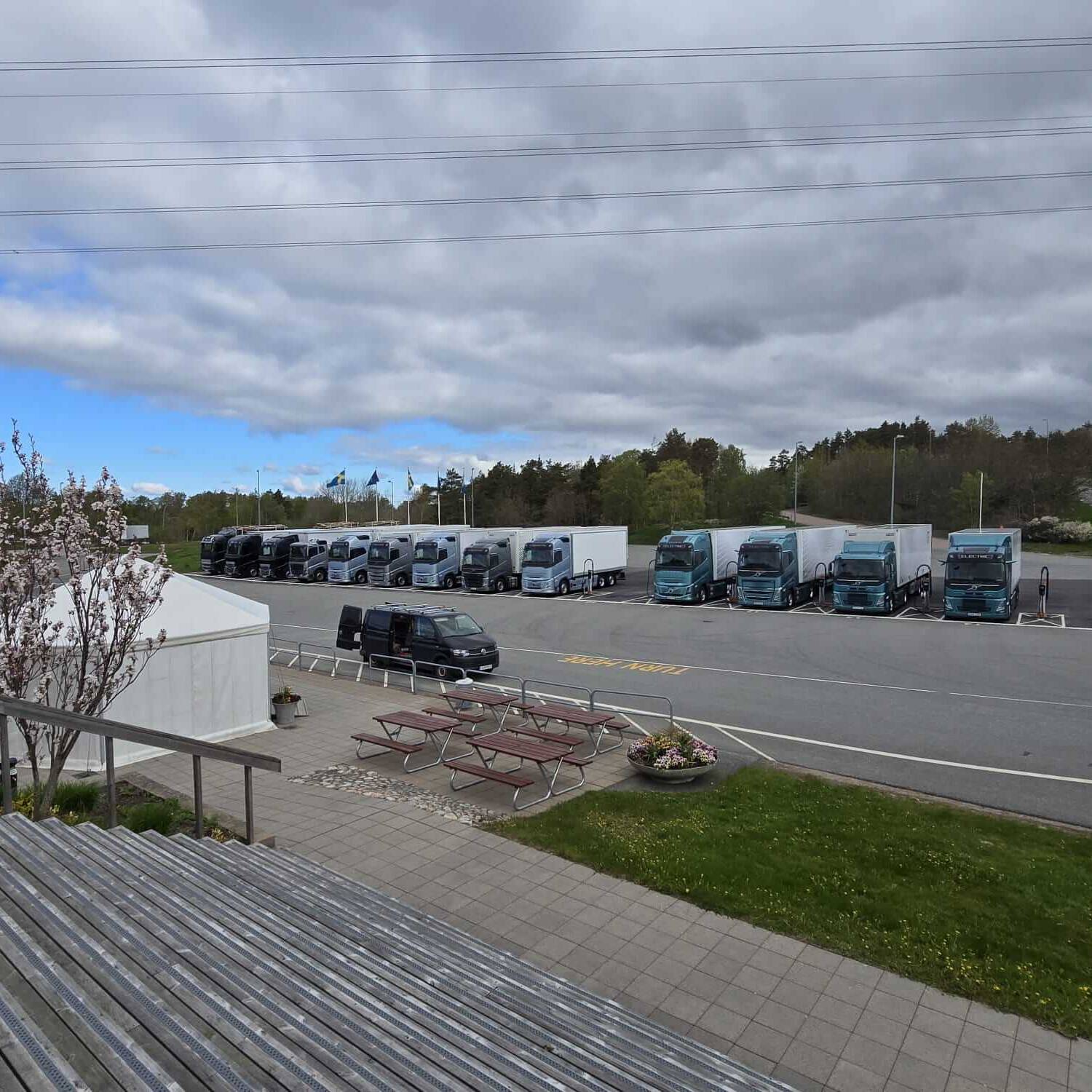
Welcome to the European Freight Leaders’ meeting at Volvo Trucks Experience Center in Gothenburg
By Roger Alm & Marie Carlsson


Why tracking decarbonisation in logistics over a decade matters
By the Kuehne Climate Center (KCC) & Kühne Logistics University (KLU)